

Competing for visibility online isn't getting any easier and that's not because there are simply more websites than there used to be. Today's search landscape includes AI Overviews, AI-powered search assistants, zero-click search experiences, video results, and increasingly sophisticated search engine algorithms. As a result, a successful search engine optimization (SEO) strategy now requires more than ranking for a handful of keywords.
Table of Contents
- What's New with Search Engines?
- Understanding Search Intent
- SEO Authority and Engagement
- What Are AI Overviews?
- Discovery Continues to Shift
- Top 10 Elements of an SEO Strategy
- 1. Search Intent and Content Quality
- 2. AI Overviews and Featured Snippets
- 3. Generative Engine Optimization (GEO)
- 4. Organic Engagement and Qualified Traffic
- 5. Quality Backlinks and Brand Mentions
- 6. EEAT: Experience, Expertise, Authoritativeness, and Trustworthiness
- 7. Local SEO and Google Business Profile
- 8. Schema Markup and Page Experience
- 9. Short-Form Video and YouTube Visibility
- 10. Refresh, Consolidate, or Remove Outdated Content
- Get Expert Help with SEO Strategy
The good news? The foundational elements of SEO haven't changed. Strong content, technical optimization, keyword research, and authority still matter. However, marketers who want to remain visible in 2026 and beyond must also consider how search engines and AI tools discover, interpret, and cite information.
Today, the most successful SEO strategies strike a balance between traditional ranking factors and emerging opportunities in generative search. Whether you're trying to improve rankings, drive qualified traffic, or show up in AI-generated answers, focusing on the right SEO elements will help strengthen your visibility across today's SERP and tomorrow's search experiences.
Let's explore what's changing with search engines and the top 10 elements of an SEO strategy worth prioritizing today.
What's New with Search Engines?
Search has evolved far beyond search engine result pages (SERPs). While Google remains the dominant search platform, for now, users are increasingly finding information through AI-powered experiences like Google AI Overviews, AI Mode, ChatGPT, Gemini, YouTube, Reddit, and other trusted sources.
This shift has created a growing conversation around generative engine optimization (GEO). GEO doesn't replace SEO—it builds upon it. A strong GEO vs. SEO strategy focuses on helping both traditional search engines and AI-powered systems understand, trust, and reference your content.
Understanding Search Intent
Search engines have become remarkably skilled at identifying user intent. Rather than matching keywords alone, they evaluate context, meaning, user behavior, and relevance to determine which content provides the best answer. AI-powered search experiences have accelerated this trend. Whether someone searches traditionally or asks a conversational question within an AI platform, content that provides clear answers and addresses real user needs consistently performs best.
Creating helpful, audience-focused content should remain a top SEO and GEO priority. Organizations that understand their audience's questions and provide useful answers continue to earn visibility, engagement, and trust.
SEO Authority and Engagement
Search engines and AI systems alike prioritize trusted sources. Backlinks from reputable websites remain important, but authority today is built through a combination of factors including expertise, engagement, brand recognition, topic depth, and content quality. The most successful brands create content that demonstrates genuine knowledge while providing value to their target audience.
Strong authority signals not only improve rankings but can also increase the likelihood of your content being cited in AI-generated responses.
What Are AI Overviews?
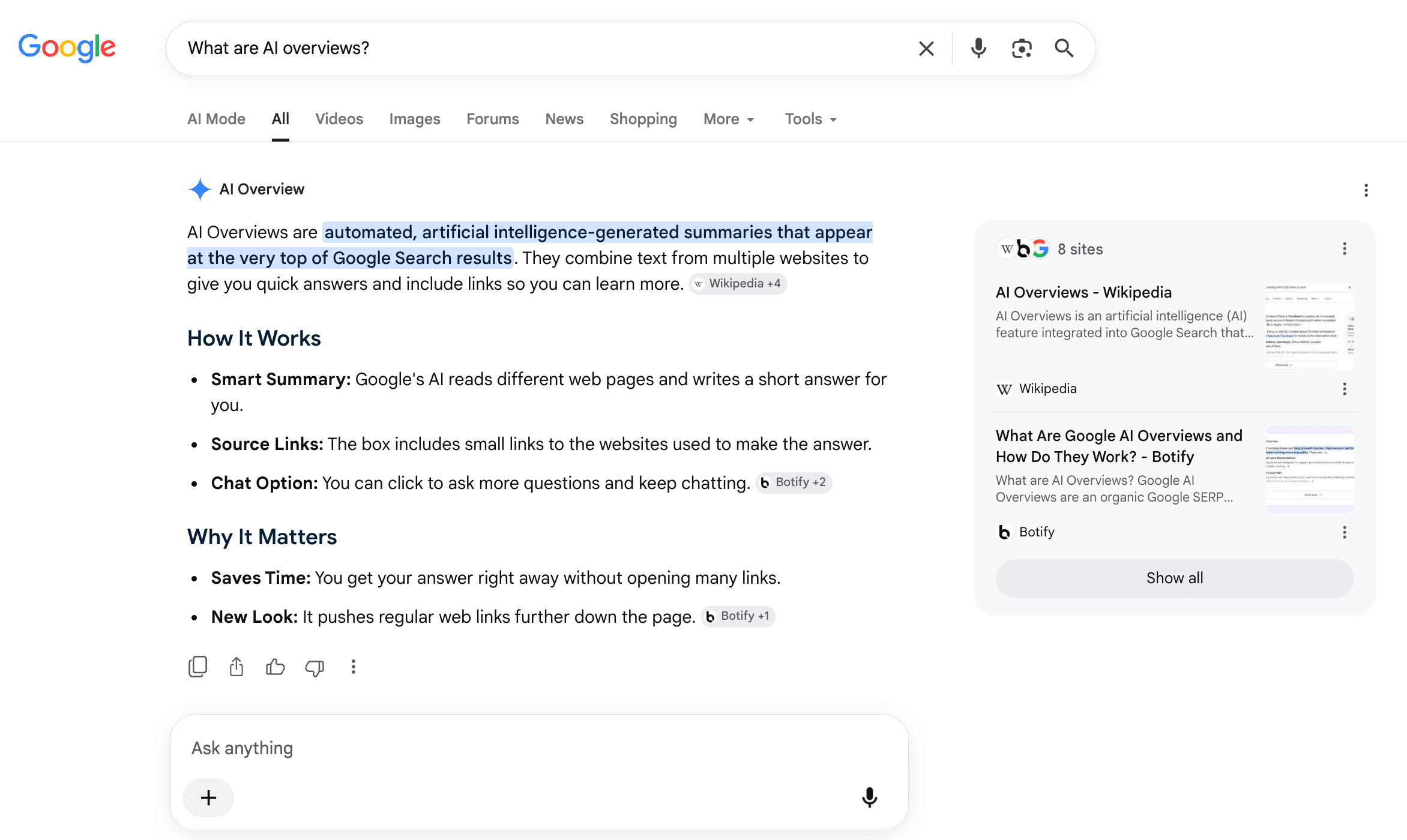
A few years ago, marketers focused heavily on featured snippets, People Also Ask sections, image carousels, and other rich results. While those SERP features still matter, AI Overviews have quickly become one of the most important elements of modern search visibility.
AI Overviews use artificial intelligence to generate answers directly within search results, often summarizing information from multiple sources and citing those sources within the response. This has introduced more zero-click searches, where users receive answers without ever visiting a website. However, being cited as a trusted source can still create significant visibility and brand awareness.
If you're wondering how to optimize for AI Overviews or how to structure content for AI citations, focus on:
- Answering questions clearly and directly
- Using descriptive headings and subheadings
- Demonstrating expertise and first-hand experience
- Supporting claims with credible sources
- Organizing content logically
- Implementing structured data where appropriate
The goal is no longer simply ranking on the SERP—it's becoming part of the answer.
Discovery Continues to Shift
Perhaps the biggest change is how people search. Buyers increasingly turn to AI assistants, forums, social platforms, review websites, podcasts, and YouTube before making decisions. As a result, visibility today requires more than traditional rankings alone.
Successful organizations focus on building content ecosystems that can be discovered across multiple platforms while maintaining strong SEO fundamentals. Today, SEO and GEO work together to maximize visibility wherever customers seek information.
Top 10 Elements of an SEO Strategy
1. Search Intent and Content Quality
The foundation of every successful SEO strategy remains understanding what your audience actually needs. Keyword research is important, but keywords only tell part of the story. Effective SEO requires understanding the motivations, concerns, questions, and goals behind those searches.
Create content that solves problems, answers questions, and supports decision-making. Search engines increasingly reward helpful content because it's what users ultimately want. When content aligns with search intent, rankings, engagement, and conversions tend to follow.
2. AI Overviews and Featured Snippets
Featured snippets still matter, but AI Overviews have expanded the opportunity. To improve visibility in both formats:
- Answer questions directly
- Use concise summaries
- Include numbered and bulleted lists
- Structure content logically
- Address common follow-up questions
These approaches make your content easier for both human readers and AI systems to understand, summarize, and reference.
3. Generative Engine Optimization (GEO)
One of the newest elements of an SEO strategy for 2026 and beyond is Generative Engine Optimization. GEO focuses on increasing the likelihood that AI systems reference, cite, or summarize your content. If you're building an AI search optimization checklist, focus on:
- Question-and-answer content structures
- Strong topical authority
- Clear content hierarchy
- Original expertise and insights
- Credible supporting sources
- Consistent content updates
- Structured data implementation
Organizations wondering how to rank in AI search results should recognize that the same characteristics that help content rank often help it earn AI citations as well.
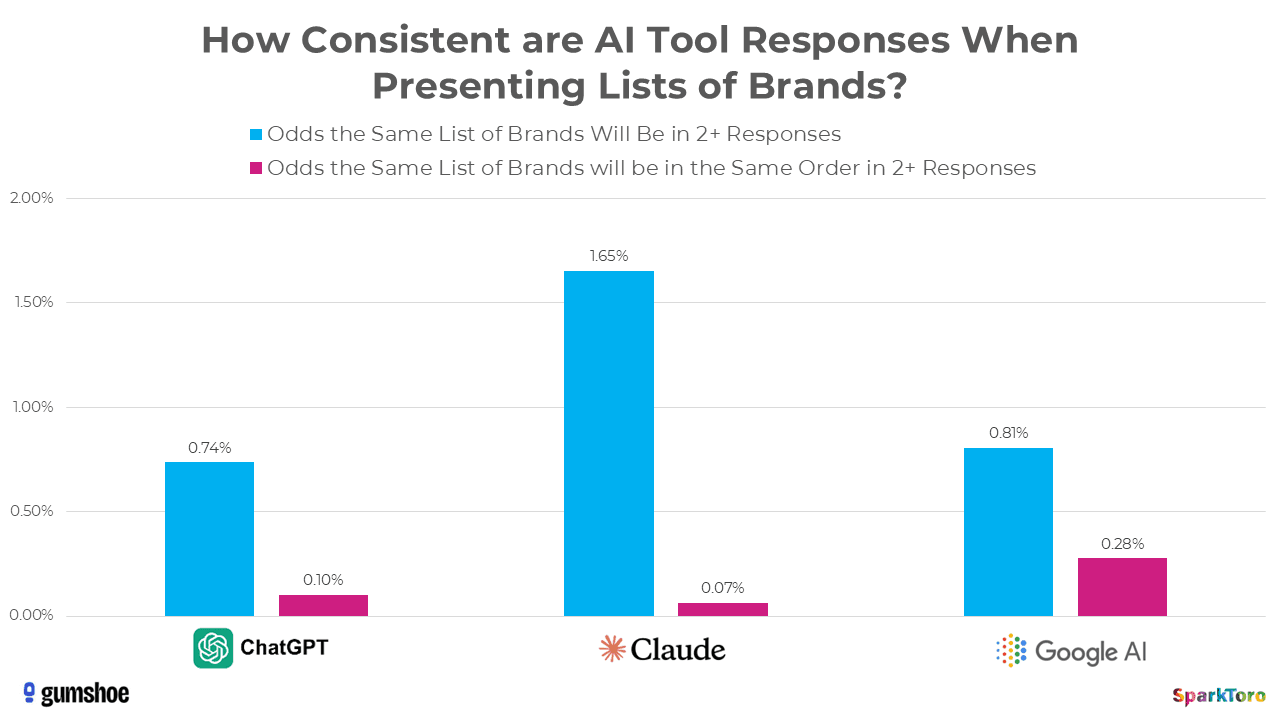
GEO measurement is still evolving. Traditional SEO tools like Google Search Console can show queries, rankings, clicks, impressions, and landing pages. AI visibility is much less consistent. Research shows AI tools may return different brand recommendations across repeated prompts, which makes rank-style GEO tracking highly volatile. For now, marketers should monitor who is being cited, look for patterns, and prioritize credibility-building opportunities—without obsessing over exact rankings.
4. Organic Engagement and Qualified Traffic
As AI search continues to answer simple questions directly on the SERP, marketers may see reductions in top-of-funnel informational traffic, especially if you focused on top-of-funnel awareness content. The shift, however, isn't necessarily bad. The visitors who do click through are often more qualified and closer to taking action.
Instead of focusing on bounce rate—which has largely been replaced by engagement-focused metrics in GA4—pay close attention to:
- Engaged sessions
- Time on site
- Scroll depth
- Conversions
- Internal link engagement
- AI referral traffic quality
The goal isn't simply attracting traffic. It's attracting the right traffic. By shifting your content to focus on your target audience, deeper in the funnel, you'll still show up when they are in need, and you should see improved engagement with your organic and AI referral traffic.
5. Quality Backlinks and Brand Mentions
Backlinks remain strong search engine authority signals. However, quality matters far more than quantity. Your strategy should include a focus on earning mentions and links and there are a variety of sources that can help your SEO:
- Industry publications
- Trade organizations
- Community resources
- News outlets
- Association websites
- Strategic partners
- Influencers
- Credible YouTube creators
- High-quality Reddit discussions
The best backlinks come from sources that already rank, influence conversations, and command trust within your industry.
6. EEAT: Experience, Expertise, Authoritativeness, and Trustworthiness
Google's EEAT framework still plays a critical role in content evaluation.
- Experience: Show evidence of real-world knowledge and firsthand insights.
- Expertise: Ensure content is produced or reviewed by qualified subject matter experts.
- Authoritativeness: Build credibility through ongoing recognition, reviews, mentions, and quality backlinks.
- Trustworthiness: Provide accurate information, cite reputable sources, and maintain transparency.
AI search systems increasingly rely on these signals as well, making EEAT essential for both SEO and GEO strategies.
7. Local SEO and Google Business Profile
Local SEO continues to be important for organizations serving specific regions or markets. There are a variety of things you should be doing both on and off your website for your local SEO strategy.
Ensure your website clearly communicates—to both humans and the systems crawling your site—your service area, locations and what you do (products and services). If you only want local traffic, you should add your location to your longtail keywords and title tags.
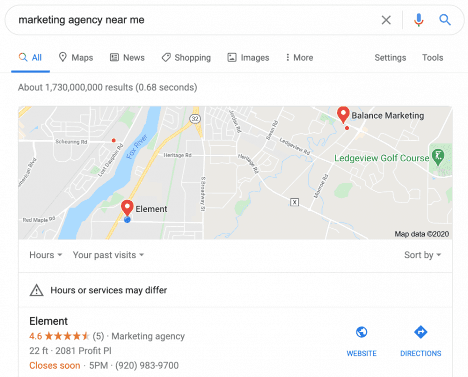
Off your own website, optimize and maintain an active Google Business Profile. Keep business information accurate, encourage reviews, update images, and monitor local listings across the web.
8. Schema Markup and Page Experience
The technical details still matter and schema markup and page experience are two areas to focus on. Schema markup is a kind of structured data that's added to the code of your website to help search engines and AI systems better understand and index your content. The code labels key information on the page, like images, operating hours, recipe bake times, event dates, product details, and much more. Instead of making search engines and AI systems guess what's on the page, schema gives the platform clearer context.
Page experience is another signal to search engines. Google uses Core Web Vitals to measure whether or not users will have a positive experience based on page loading speed, interactivity speed, and visual stability speed. Specifically, these metrics are called Largest Contentful Paint (LCP), Interaction to Next Paint (INP) and Cumulative Layout Shift (CLS).
A fast, stable, mobile-friendly website improves both user experience and search visibility. Testing for Core Web Vital performance is easy. Just plug your URL into Google's PageSpeed Insights. Fixing performance issues can be more challenging, but it remains an essential SEO priority as Google continues to evolve its ranking systems. A thorough site audit and skilled programming can help you get optimized.
9. Short-Form Video and YouTube Visibility
YouTube remains one of the largest search platforms in the world. Meanwhile, short-form vertical video continues to influence how people discover brands, products, and services.
Video supports SEO by:
- Increasing engagement
- Answering questions visually
- Building brand authority
- Providing additional search visibility
- Supporting GEO efforts when creators reference or discuss your brand
The best video strategies complement written content rather than replace it.
10. Refresh, Consolidate, or Remove Outdated Content
Content maintenance has become a critical SEO activity. Instead of simply deleting old pages, evaluate organic traffic, backlinks, rankings, conversions, and user value. If content still performs, update it. Show a recent "last updated" date when appropriate and refresh information regularly.
If content is outdated, receives no meaningful traffic, and has no link equity, consider removing it and implementing a proper redirect strategy. Also ensure any internal links pointing to removed content are updated to prevent dead ends.
Get Expert Help with SEO Strategy
Implementing the elements of SEO outlined above can significantly improve your visibility across traditional search engines and emerging AI-driven search experiences. However, the most successful SEO strategies don't rely on isolated tactics. They combine technical optimization, content strategy, authority building, analytics, and ongoing refinement into a cohesive program.
At Element, we believe strategy comes before tactics. Our integrated team combines SEO, content, development, analytics, PR, and digital strategy expertise to help organizations strengthen visibility and generate meaningful business results.
Whether you're looking to improve organic performance, prepare for AI search, or build a long-term growth strategy, we're here to help.
Reach out today to build an SEO strategy that improves visibility, attracts more qualified traffic, and strengthens your bottom line.
You might also be interested in our related article: SEO Priorities: Which Tactics Make the Biggest Impact on Rankings